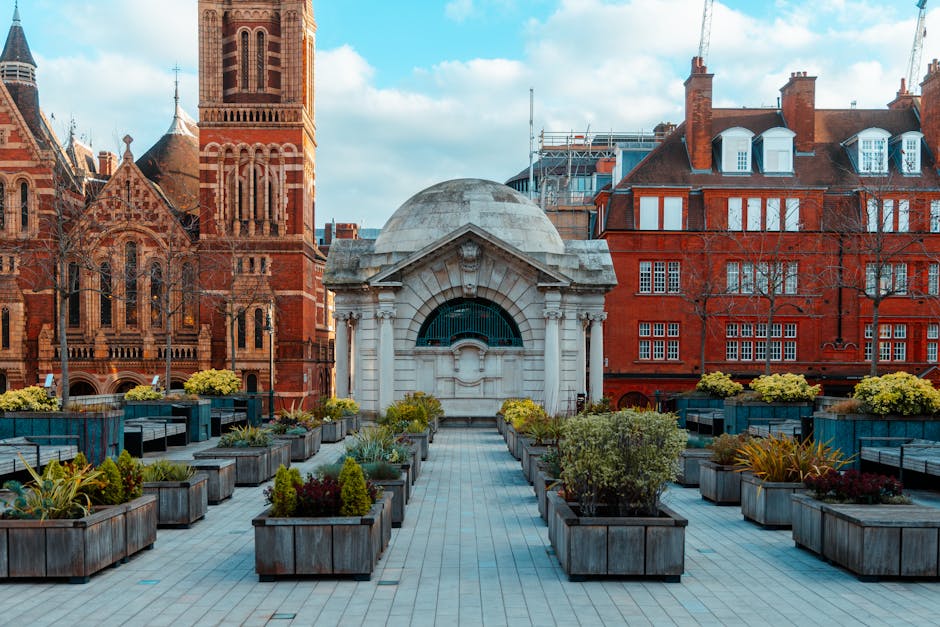
High Holborn gardeners for courtyard and roof gardens
Small outdoor spaces can be the most rewarding ones to work on, but they can also be the most unforgiving. A courtyard that barely catches the sun, a roof terrace that dries out by lunchtime, a narrow access route, a building manager with strict rules, and suddenly gardening is not just about plants anymore. It is about planning, weight, drainage, wind, maintenance, and making every square metre work hard.
That is where High Holborn gardeners for courtyard and roof gardens come into their own. In a busy central London setting, the right planting and maintenance approach can turn a modest space into something calm, private, and genuinely useful. Whether you want a leafier lunch spot, a low-maintenance terrace, or a rooftop that still looks good in February, the details matter. And yes, a lot of it is the unglamorous stuff-soil choice, irrigation, access, and regular upkeep-but that is usually what makes the difference between a garden that thrives and one that slowly gives up.
This guide walks through how specialist gardeners approach courtyard and roof gardens in High Holborn, what to expect, common mistakes to avoid, and how to choose a practical solution that suits your space. If you are deciding whether to refresh a courtyard, upgrade a roof garden, or bring in ongoing help, this should give you a clear, grounded starting point.
Table of Contents
- Why High Holborn gardeners for courtyard and roof gardens Matters
- How High Holborn gardeners for courtyard and roof gardens Works
- Key Benefits and Practical Advantages
- Who This Is For and When It Makes Sense
- Step-by-Step Guidance
- Expert Tips for Better Results
- Common Mistakes to Avoid
- Tools, Resources and Recommendations
- Law, Compliance, Standards, or Best Practice
- Options, Methods, or Comparison Table
- Case Study or Real-World Example
- Practical Checklist
- Conclusion
- Frequently Asked Questions
Why High Holborn gardeners for courtyard and roof gardens Matters
High Holborn sits in a part of London where outdoor space is often limited, overlooked, or physically challenging. That is exactly why the right gardening support matters so much. A courtyard may have only a sliver of sunlight between tall buildings. A roof garden may face strong wind, fast drainage, and access restrictions. In both cases, the usual "plant a few shrubs and see how it goes" approach tends to fall apart pretty quickly.
Specialist gardeners understand how central London spaces behave. They know that a north-facing courtyard needs different planting logic from a sheltered west-facing terrace. They also know that roof gardens are not simply smaller versions of ground-level gardens. A roof garden often needs lighter growing media, careful pot selection, wind-tolerant planting, and a maintenance routine that keeps water and nutrients where plants can actually use them.
There is also a visual reason this matters. In a dense part of London, even a modest planting scheme can soften hard materials, reduce glare, and make a building feel more welcoming. You notice it in the morning when the light hits the leaves, or later in the day when the space still feels alive rather than stripped and dusty. To be fair, that calm feeling is often what people are really paying for.
If you are already thinking about a broader outdoor refresh, it can help to look at related services too, such as regular garden maintenance, professional landscaping support, or practical planting design for compact gardens. Those wider services often connect directly with courtyard and roof projects.
How High Holborn gardeners for courtyard and roof gardens Works
Good courtyard and roof garden work usually starts with assessment, not planting. That sounds obvious, but it is where rushed projects often go wrong. A gardener or garden specialist will usually begin by looking at sun, shade, shelter, access, drainage, structure, existing surfaces, and what the space is meant to do. Is it for entertaining? Quiet use? Visual impact from inside? Year-round greenery? The answer changes everything.
For courtyards, the focus is often on scale and balance. The aim is to make a tight space feel intentional rather than cluttered. That may mean using vertical planting, clipped evergreen structure, slender containers, shade-tolerant plants, and materials that do not overwhelm the eye.
Roof gardens ask different questions. How much load can the space handle? What is the wind exposure like? Does irrigation need to be built in? How accessible is the space for maintenance? Plants on a roof can dry out faster than people expect, especially in summer. One warm day and you can almost hear containers asking for water. Not dramatic, just true.
The process normally includes some combination of these stages:
- Initial site visit and measurements.
- Assessment of access, weight limits, drainage, light, and exposure.
- Discussion of style, use, and maintenance expectations.
- Plant selection and container or bed planning.
- Installation, soil improvement, and positioning.
- Aftercare, watering plans, seasonal pruning, and replacements where needed.
For spaces where reliability matters, many property owners also want ongoing support from a team that can handle broader upkeep. A good fit can be a local London gardeners service, especially if you need consistent care across multiple outdoor areas or managed buildings. If you are in a more commercial or shared setting, it may also be worth reviewing commercial gardening support and grounds maintenance options.
Key Benefits and Practical Advantages
The most obvious benefit is simple: your space looks better. But that undersells it. A well-planned courtyard or roof garden does a lot of work quietly in the background.
- Better use of limited space: Compact gardens can feel intentional, layered, and usable rather than awkward or empty.
- Improved year-round appearance: Evergreen structure, bark texture, and seasonal planting help the space hold together in winter.
- More comfortable outdoor living: Screening, planting height, and shade can make a hot or exposed space feel much more pleasant.
- Reduced maintenance stress: With the right plant choices and irrigation, you are not constantly firefighting dryness, collapse, or clutter.
- Better visual value from inside: In many London buildings, the garden is viewed through glass as much as it is used directly.
- Safer, more practical upkeep: A specialist setup can reduce avoidable damage to membranes, surfaces, and containers.
There is also the less tangible benefit of calm. A courtyard with a few well-placed ferns, grasses, or clipped shrubs can soften the whole mood of a property. A roof terrace with reliable planting can feel like a genuine escape, even if you are only stepping out for five minutes with a coffee. That matters more than people sometimes admit.
And if you are planning to refresh rather than rebuild, the right team can often work around existing features instead of starting from scratch. That saves time and keeps disruption down, which in a place like High Holborn is no small thing.
Who This Is For and When It Makes Sense
Specialist courtyard and roof garden gardening is not only for luxury penthouses or corporate terraces. It makes sense for a surprisingly wide range of people and properties.
Homeowners and residents
If you have a compact courtyard, balcony-style terrace, or roof space attached to a flat or townhouse, specialist help can make the difference between a space you avoid and one you actually use. This is especially relevant if you want low-maintenance planting that still looks tidy.
Landlords and property managers
Shared outdoor spaces need consistency. If a garden is visible to tenants, clients, or visitors, then scruffy planting and tired containers create a poor first impression. Regular care also helps avoid bigger repair issues later.
Offices, hospitality venues, and mixed-use buildings
Roof gardens and courtyards often support wellbeing, client perception, and staff breaks. The standards are a bit different here. The planting has to look good, yes, but it also needs to survive wear, weather, and the occasional dropped cigarette or overenthusiastic watering can. Happens.
When it makes sense to bring in a specialist
- When the space is small but important.
- When there are access or load-bearing concerns.
- When previous planting has struggled repeatedly.
- When you want a cleaner, more design-led finish.
- When regular maintenance is becoming a burden.
If you are comparing service breadth, it can be useful to see whether a provider also handles tree surgery for larger planting, hedge trimming for screening, or turfing and lawn replacement where ground-level areas are involved. That wider capability often signals stronger practical experience overall.
Step-by-Step Guidance
If you are approaching a courtyard or roof garden project for the first time, the process is easier when broken into clear stages. Here is the practical version.
- Clarify the purpose of the space. Do you want privacy, colour, shade, dining space, or just something that does not look bare? A rooftop used for quiet reading needs a different layout from one used for entertaining.
- Measure the conditions properly. Note sun exposure, wind patterns, drainage points, wall reflections, and awkward corners. In central London, adjacent buildings can create very specific microclimates.
- Check structural and access issues. Roof gardens especially may need weight considerations, safe access for materials, and approval from building management or freeholders.
- Choose planting that suits the site. Think in terms of resilience first, beauty second, and then both together. That might include drought-tolerant perennials, clipped evergreens, grasses, ferns, or seasonal colour in containers.
- Plan irrigation and drainage. This step saves a lot of grief later. Self-watering containers, drip systems, or disciplined manual watering can all work, but the choice must suit the space.
- Install in layers. Start with structure, then medium-height planting, then detail. The eye needs somewhere to rest.
- Build in maintenance from day one. A garden is not finished when it is planted. It is finished when it can be maintained sensibly without constant emergency fixes.
One useful way to think about it: a roof garden is a system, not just a collection of plants. The system includes containers, root space, water, wind protection, access, and aftercare. Miss one part and the whole thing feels off.
For households or buildings with recurring maintenance needs, a combined approach often works best. For example, some clients pair seasonal planting with broader garden clearance or lawn care services where a property has more than one outdoor area. It keeps things tidy without overcomplicating the schedule.
Expert Tips for Better Results
There are a few habits that consistently improve the outcome of courtyard and roof gardens. None of them are flashy, but they make a real difference.
- Choose structure before colour. Strong evergreen bones help the garden look coherent when flowers are out of season.
- Use containers generously. In compact spaces, a few well-sized planters often work better than many small ones. Tiny pots dry out fast and look fussy.
- Match plants to exposure. A sheltered courtyard and a windy rooftop are not the same environment, not even close.
- Keep sightlines in mind. In a tight urban space, what you see from the window matters almost as much as what you see standing in the garden.
- Leave room to move. A beautiful garden can still be annoying if it blocks a door, narrows access, or makes cleaning difficult.
- Plan for winter. A lot of gardens look lovely in June and forgotten by January because no one thought about texture, bark, evergreen forms, or lighting.
Here is a small but useful trick: before committing to a layout, stand in the space at two different times of day. Mid-morning and late afternoon often reveal different problems. The shadow line shifts. The wind changes. That one awkward corner suddenly becomes obvious. It is a bit old-school, but it works.
Also, if your building has a shared entrance or managed courtyard, keep neighbours or management informed when changes are being made. A little communication avoids silly misunderstandings. And in a city building, silence can be mistaken for anything.
Common Mistakes to Avoid
Most courtyard and roof garden problems come from a fairly short list of avoidable mistakes. The good news is that once you know what to watch for, they are easier to prevent.
- Using plants that are too large or too thirsty. A plant that looks fine in a nursery can struggle badly in a windy, dry roof setting.
- Ignoring drainage. Waterlogged containers can damage roots and stain or degrade surfaces.
- Choosing style over reality. Some looks are lovely on paper but dreadful in a narrow, exposed London courtyard.
- Underestimating maintenance. Even low-maintenance planting still needs feeding, pruning, and checking.
- Overcrowding the space. Too many pots, too many species, too many textures. The result can feel noisy rather than lush.
- Forgetting access for future work. If a planter cannot be moved, inspected, or reached, it becomes a problem later.
There is a quieter mistake too: not being honest about how much care the space will really receive. If nobody is going to water daily in summer, then design for that reality. It is better to have a resilient, slightly restrained garden than a gorgeous one that collapses in August. Truth be told, that happens a lot.
Tools, Resources and Recommendations
You do not need every fancy tool under the sun, but the right equipment and materials make courtyard and roof garden work much easier. A good gardener will usually bring most of what is needed, yet it helps to understand the basics if you are commissioning work or maintaining the space yourself.
Useful tools and materials
- Quality containers with proper drainage
- Lightweight growing media for roof spaces where appropriate
- Watering cans, hoses, or drip irrigation systems
- Secateurs, loppers, and hand tools for regular care
- Mulch for moisture retention in suitable situations
- Plant ties, stakes, and discreet supports for wind-prone areas
Practical recommendations
- Favour robust planting palettes: evergreen shrubs, ornamental grasses, tough perennials, and shade-loving plants often perform well when selected carefully.
- Use seasonal accents: bulbs, annuals, and container colour can lift the space without forcing the whole scheme to do too much.
- Keep a simple care schedule: weekly checks in peak season often prevent bigger problems.
If you are looking for a broader support network around your property, you may also find value in commercial gardening services, garden design support, or a reliable maintenance plan. Those services are especially helpful when the courtyard or roof garden is part of a larger site.
Law, Compliance, Standards, or Best Practice
Courtyard and roof garden projects in London can involve more than planting decisions, particularly on roof spaces or in managed buildings. While every site is different, a careful approach usually includes a few common checks.
- Building management or landlord permission: Always confirm what is allowed before moving heavy containers, adding fixed structures, or changing waterproofed surfaces.
- Load and structure considerations: Roof gardens may need professional assessment where significant weight is involved. Do not guess.
- Waterproofing protection: Roof systems should be protected from root damage, standing water, and sharp-edged planters.
- Access and safety: Safe lifting routes, fall protection where relevant, and sensible maintenance access all matter.
- Waste handling: Green waste and removed materials should be disposed of responsibly under normal local waste practices.
Because this is site-specific, a reputable gardener will usually be cautious rather than overly confident. That is a good sign. If someone brushes aside roof structure, drainage, or permission checks, that is the moment to pause. Better a slightly slower start than a very expensive repair later.
For managed properties, it can also help to establish who is responsible for ongoing watering, access, and sign-off on changes. Simple agreements prevent the classic "I thought someone else was doing it" problem. Happens more often than people like to admit.
Options, Methods, or Comparison Table
Not every courtyard or roof garden needs the same solution. Some spaces are best treated as low-maintenance display areas. Others need fuller planting and regular care. The right method depends on the site, the user, and the budget.
| Approach | Best for | Strengths | Watch-outs |
|---|---|---|---|
| Container-led planting | Small courtyards and roof terraces | Flexible, manageable, easy to refresh seasonally | Can dry out quickly if irrigation is poor |
| Built-in raised beds | Spaces needing stronger structure and larger planting depth | More planting depth, better visual presence | Heavier, more complex, may need more planning |
| Low-maintenance evergreen scheme | Busy owners or managed buildings | Reliable year-round structure, simpler upkeep | Can feel plain if not layered well |
| Seasonal display planting | Feature courtyards and hospitality spaces | High visual impact, fresh look through the year | Needs more frequent replacement and care |
As a rule of thumb, if the space is hard to access, container-led planting is often the most practical place to start. If the space is central to the property's identity and can support more intervention, raised structures or a fuller scheme may be worth it. There is no one-size-fits-all answer, which is annoying but true.
Case Study or Real-World Example
Imagine a small High Holborn courtyard tucked behind a commercial building. It is paved, shaded for most of the day, and visible from several office windows. The space feels fine in theory, but in practice it looks flat, echoey, and a bit forgotten. People walk past it. Nobody lingers.
A sensible redesign might not try to transform it into a fantasy garden. That would be silly. Instead, the gardener could introduce a compact evergreen framework, shade-tolerant planting in large containers, and a few taller elements to soften the perimeter. Maybe some ferns for texture, maybe clipped shrubs for shape, maybe seasonal bulbs for small bursts of life. Nothing overblown.
Then the maintenance plan matters just as much as the planting. In a space like this, the difference between "good enough" and "actually pleasant" can come down to regular watering, checking for litter, pruning spent growth, and replacing tired plants before they drag the whole area down. On a rainy Tuesday in March, it may not look glamorous. But when the office windows are open and the light comes in, the effect is unmistakable.
That is the quiet power of specialist courtyard and roof garden care: not drama, just steady improvement. The kind you notice when you stop noticing the old problems.
Practical Checklist
Use this checklist if you are planning work or comparing garden services. It keeps the conversation focused on what matters.
- Have we identified the garden's main purpose?
- Do we know how much sun, shade, and wind the space gets?
- Has access been checked for materials, tools, and maintenance?
- Are load-bearing and waterproofing considerations clear for roof spaces?
- Are the plants suitable for the actual conditions, not just the look we want?
- Is there a realistic watering plan for summer and holiday periods?
- Will the design still work in winter, not only in peak season?
- Are there enough paths, gaps, and access points for maintenance?
- Have permissions or building rules been reviewed where relevant?
- Is there a plan for ongoing care, seasonal refreshes, and replacements?
If you can answer most of those confidently, you are already ahead of the game. If not, that is fine too. It just means the project needs a bit more thinking before anyone lifts a shovel.
Get a free quote today and see how much you can save.
Conclusion
High Holborn courtyard and roof gardens work best when they are designed with the real conditions in mind: limited space, urban exposure, access constraints, and the need for sensible maintenance. A strong result is rarely about doing more. More often, it is about doing the right things in the right order, with the right plants and materials.
If you want a garden that feels calm, purposeful, and easy to live with, specialist help is often worth it. The best projects are not the loudest ones. They are the ones that feel settled, even on a windy day or in the middle of winter. And that, honestly, is what good London gardening is all about.
Take the next step when you are ready, keep the brief clear, and choose a team that understands the realities of small urban gardens. The space may be compact, but with the right care, it can still feel like a proper escape.
Frequently Asked Questions
What makes courtyard and roof gardens different from normal gardens?
Courtyard and roof gardens usually have tighter space, more reflective surfaces, different wind patterns, and more drainage or access constraints. They need more tailored planning than a standard ground-level garden.
Are roof gardens hard to maintain?
They can be, if they are poorly planned. With the right containers, planting, and watering setup, many roof gardens are perfectly manageable. The main challenge is usually summer dryness and exposure.
Do I need a specialist gardener for a small courtyard?
If the courtyard has awkward light, limited access, or repeated planting failures, a specialist is usually worthwhile. Small spaces can be deceptively tricky, so the right advice often saves money and time.
What plants work best in High Holborn courtyard gardens?
That depends on the light and shelter, but many courtyards do well with shade-tolerant or semi-shade plants, evergreen structure, and layered container planting. A proper site assessment is the safest way to choose.
How often should a roof garden be watered?
There is no single answer. In warm, windy weather, containers may need frequent watering. In cooler or wetter periods, less. A good irrigation plan or clear watering routine is essential.
Can I install a roof garden on any building?
No, not automatically. Roof gardens may require structural checks, permission from building management or landlords, and attention to waterproofing and access. It is best to verify the practical limits first.
What is the biggest mistake people make with courtyard gardens?
Choosing plants or materials for looks alone, without considering light, drainage, or maintenance. A garden that suits the space will usually perform far better and age more gracefully.
How do I make a small outdoor space feel bigger?
Use a restrained plant palette, vertical layers, clean lines, and a few strong focal points. Avoid overcrowding. Good spacing often makes a bigger visual difference than adding more things.
Are low-maintenance roof gardens really low maintenance?
They are lower maintenance, not no maintenance. They still need watering, pruning, seasonal checks, and occasional replacement planting. "Low" is the useful word here.
Can gardeners help with both design and ongoing care?
Yes, and that is often the best outcome. Design and maintenance work hand in hand, especially in central London gardens where plant health depends on consistent aftercare.
How do I know if a gardening service is suitable for High Holborn properties?
Look for practical knowledge of urban conditions, roof access, compact planting schemes, and maintenance planning. A good provider should ask sensible questions about your space rather than jumping straight to a quote.
Is it worth improving a very small courtyard?
Usually, yes. Even modest changes can make a big difference to how a property feels and functions. In a compact London setting, a small well-kept space can be surprisingly valuable.